
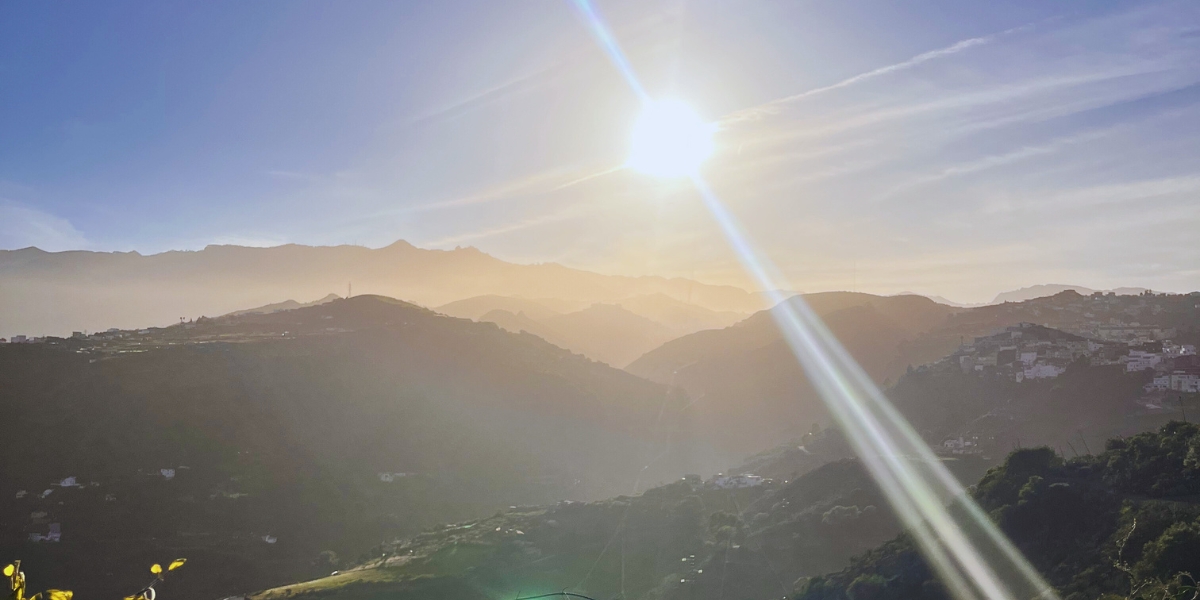
Las Palmas is the capital of Gran Canaria and really has it all: a beautiful sandy beach, plenty of cafes and restaurants and a wonderful old town to wander around. It’s the perfect starting point if you want everything to be within walking distance.
Our first stop in Las Palmas was Playa de Las Canteras, a 3 km long stretch of golden sand. Perfect for a morning walk, feeling the sun on our faces and the sand between our toes was heavenly. To make it even better, there are plenty of places to stop along the promenade for a coffee and a pastry with stunning sea views.
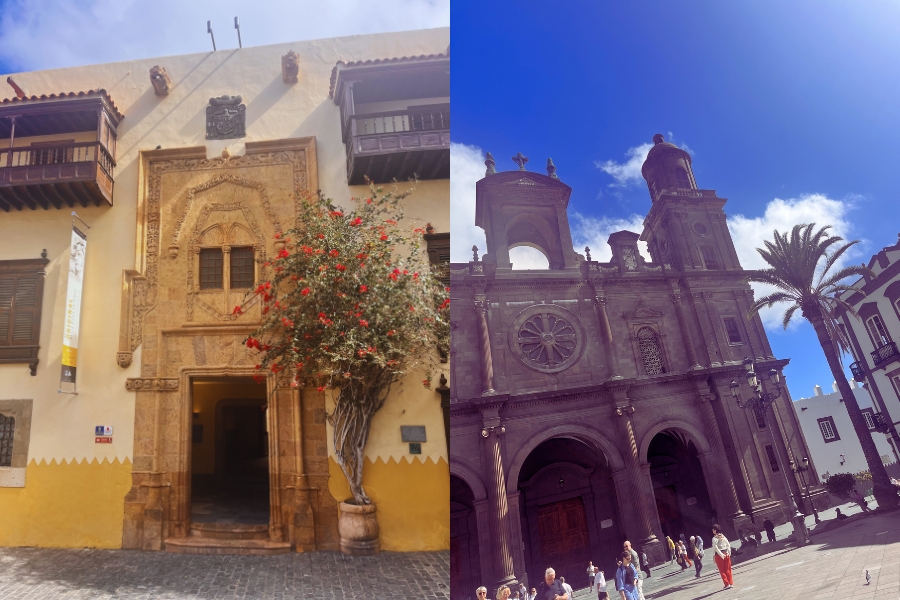
The old town (Vegueta) has a totally different atmosphere from the beach with its cobbled streets, colonial-style buildings and beautiful little squares. If you are interested in history, you must visit the Casa de Colón, a stunning colonial-style building famous for its elegant interior courtyards, carved wooden balconies and fascinating exhibits about Christopher Columbus and the Canary Islands.
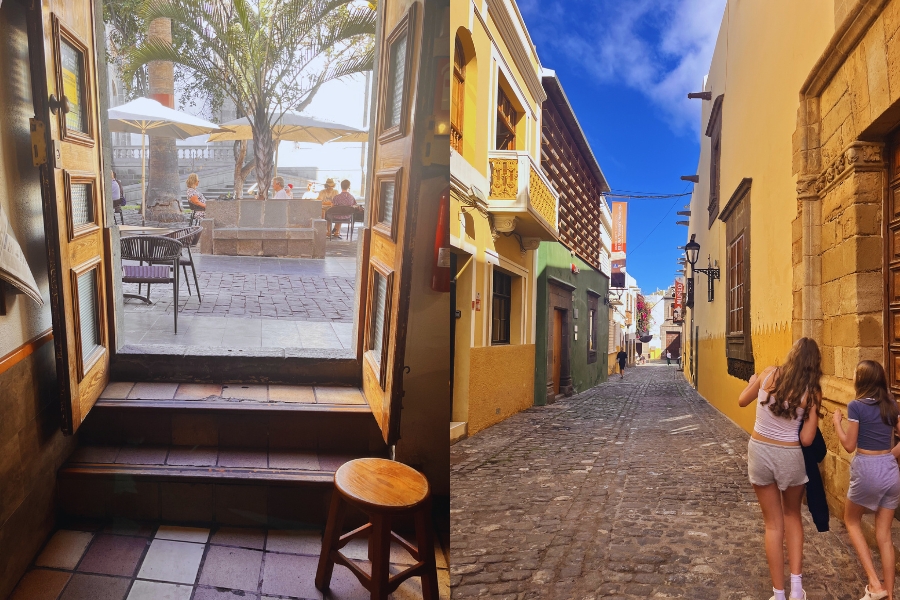
Nearby you will find the Plaza de Santa Ana which houses the first church in the Canary Islands. This large, palm tree-lined square is famous for its bronze dog statues (which my daughter loved), elegant colonial buildings, and relaxed cafe atmosphere.
From there I suggest you wander the cobbled streets and find a small restaurant or cafe for lunch or a drink. We found a cute little place with tables in a small square that served traditional Spanish food.
If you fancy a cocktail with a view, I would recommend Terraza Belevdere, the rooftop terrace at Boutique Hotel Cordial. It’s hidden behind a small entrance in Plaza de Santa Ana and doesn’t open until 3 p.m., but is the perfect hidden spot right in the center of Vegueta.
Take a hike in the mountains
Gran Canaria offers many different hiking options across its mountainous landscape, and winter is the perfect time to explore, with temperatures reaching 21-22°C. We were staying near Caldera de Bandama, a spectacular 1,000 meter wide volcanic crater offering panoramic views from its rim. Here you can take several different trails, but the 3.5 km circular route around the crater was perfect for us.
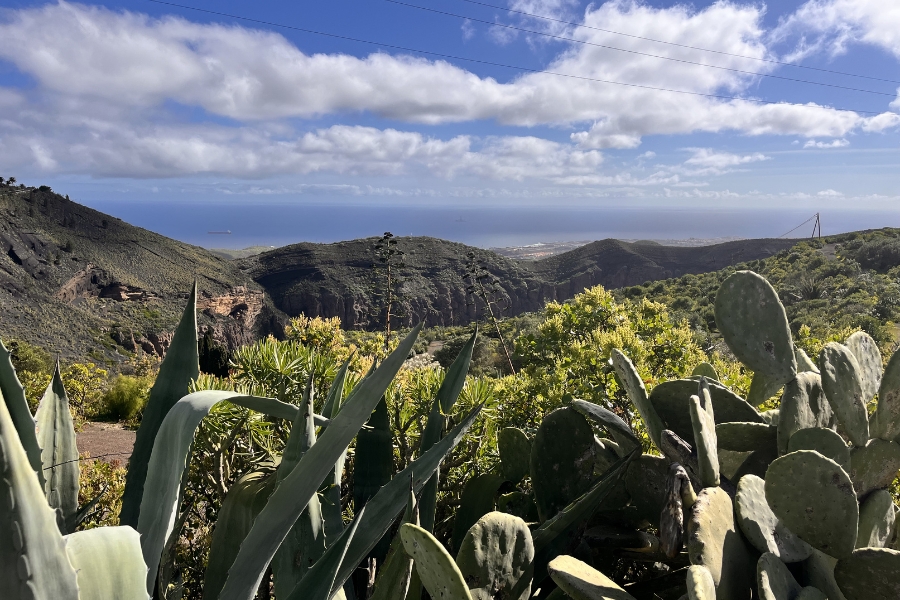
Tamadaba Natural Park has a network of trails through ancient Canary Island pine forests, dramatic cliffs and vast viewpoints over the Atlantic. If you want fresher air and quieter paths, this is the place for you.
Roque Nublo is the most iconic hike on the island. It leads to an imposing volcanic monolith rising to 1,813 m with breathtaking views of Gran Canaria and even Tenerife on a clear day.
If you love sea views and are up for a challenge, try the unforgettable coastal hike over rugged mountains to reach Güigüí beach. One of the most remote and wild beaches on the island.
Taste local products
The mountains are home to beautiful little towns each offering different specialties like chorizo from Teror, almonds from Tejeda or local goat cheese from Valleseco.
We visited the local town of Santa Brigida on Sunday morning and bought local cheese, vegetables and meat at the market. We found a cute little bakery for some sweet treats, then took them back to our villa for a lazy Sunday lunch overlooking the mountains. Heaven!
Wine tasting
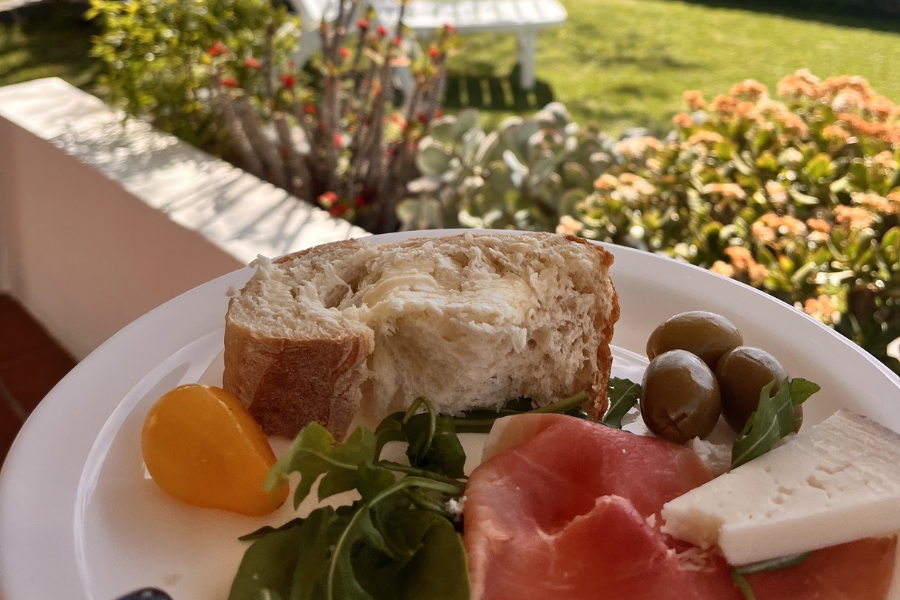
There are many small wineries in Gran Canaria offering a variety of wine tasting experiences. Bodega San Juan was very close to our house. You can stroll through the vineyard, visit the small wine museum and the old stone cellar before tasting their wines accompanied by cheese and bread. The friendly guide gives you a little insight into the vineyard’s family history while sipping a glass of volcanic wine.
Rum tasting
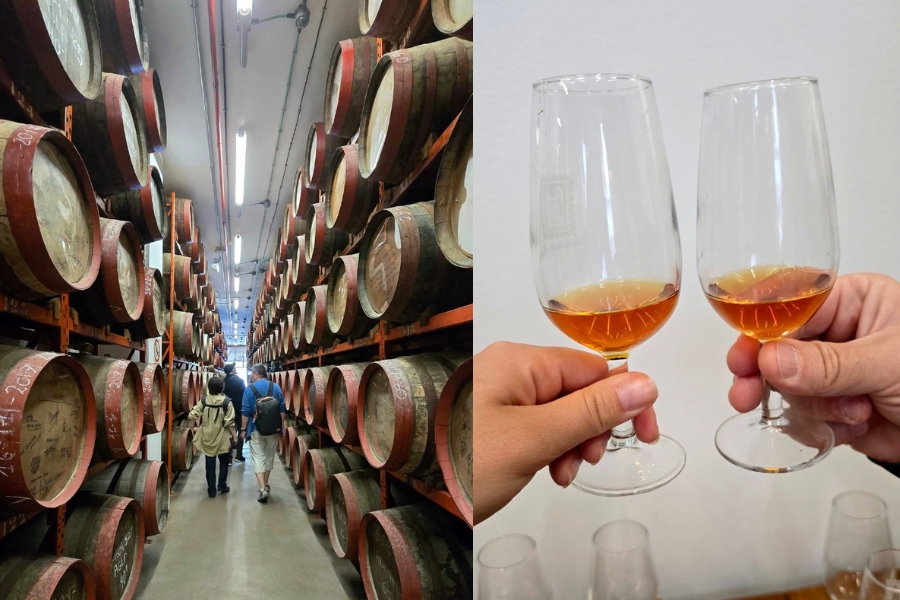
If wine isn’t your thing, perhaps opt for a rum tasting. Arucas’ historic rum distillery, Destilerías Arehucas, offers guided tours of its production halls and one of the oldest rum cellars in Europe. Then you can taste their different rums and liqueurs while discovering the history and process of making rum. The Canarian specialty of ron miel (honey rum) is delicious and you won’t be able to resist taking a bottle or two home with you.
Little Venice of Gran Canaria
Known as “Little Venice,” Puerto de Mogán is a small coastal village known for its colorful houses and small canals. It is one of the most beautiful villages in Gran Canaria and definitely worth a visit. Its whitewashed houses are covered in flowers, there is a pretty marina and even a pretty little sandy beach.
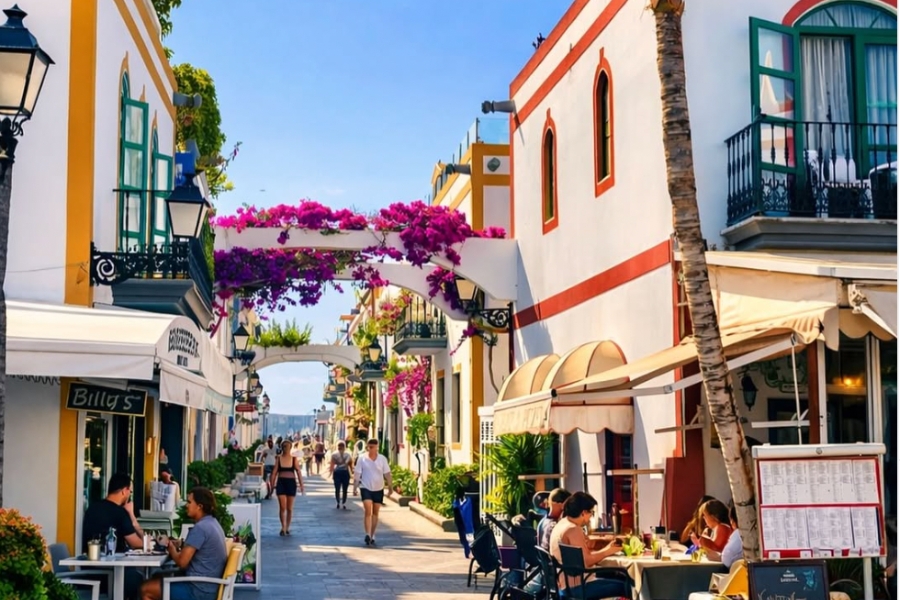
You can also walk around town to the viewpoint for beautiful views, then return to the port for lunch overlooking the sea or relax on the beach.
The Paseo de Canarias promenade
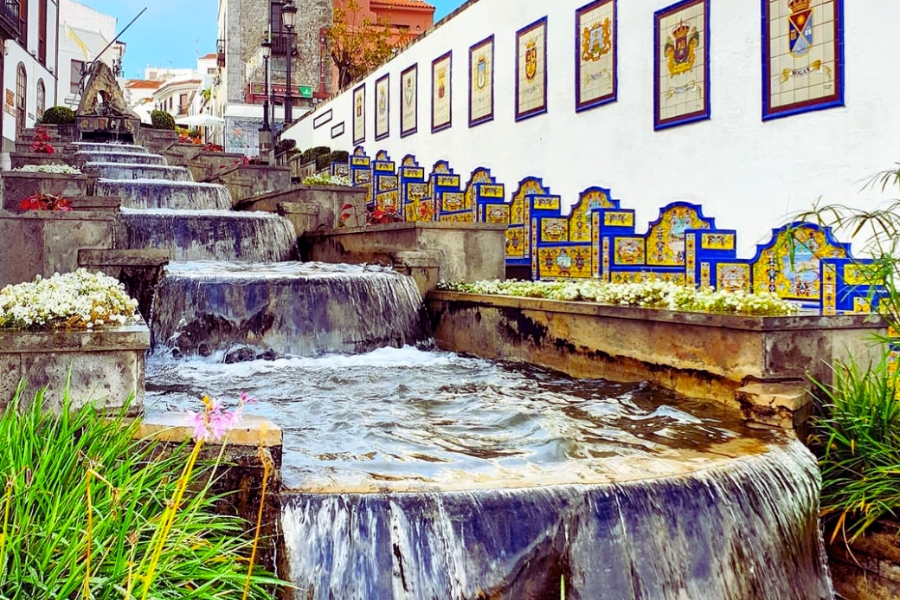
Firgas is a charming mountain village in the north of Gran Canaria with a unique focal point. The Paseo de Canarias is a stepped walkway in the heart of Firgas, designed to resemble a flowing waterfall. As you descend the steps next to the water feature, you’ll pass colorful mosaic tiles representing all of the Canary Islands, beautifully crafted ceramic benches and detailed crests of Gran Canaria’s municipalities. This is not a full day tour, but if you want to explore the north of the island, this should definitely be on your itinerary.
Dunes of Maspalomas
For a completely different experience, you can visit one of the island’s most extraordinary natural landscapes, a vast expanse of golden Sahara-like sand dunes that stretch along the southern coast. They are protected as a nature reserve, so be sure to stay on designated trails and not stray into protected areas meant to prevent erosion.
It’s a beautiful place to watch the sunset or you can combine it with some time at the beach as Playa de Maspalomas backs onto the dunes.
Why we love Gran Canaria
Gran Canaria has perfect weather all year round and is a great place to escape the harsh British winter. Not only does it have great weather, but also delicious food and relaxed Spanish culture. The landscape is spectacular and diverse, just the way we like it. One minute you’re on top of surprisingly lush mountains, the next you’re strolling the cobblestone streets of a cute little town before dining at a vineyard.
What’s not to like?
