
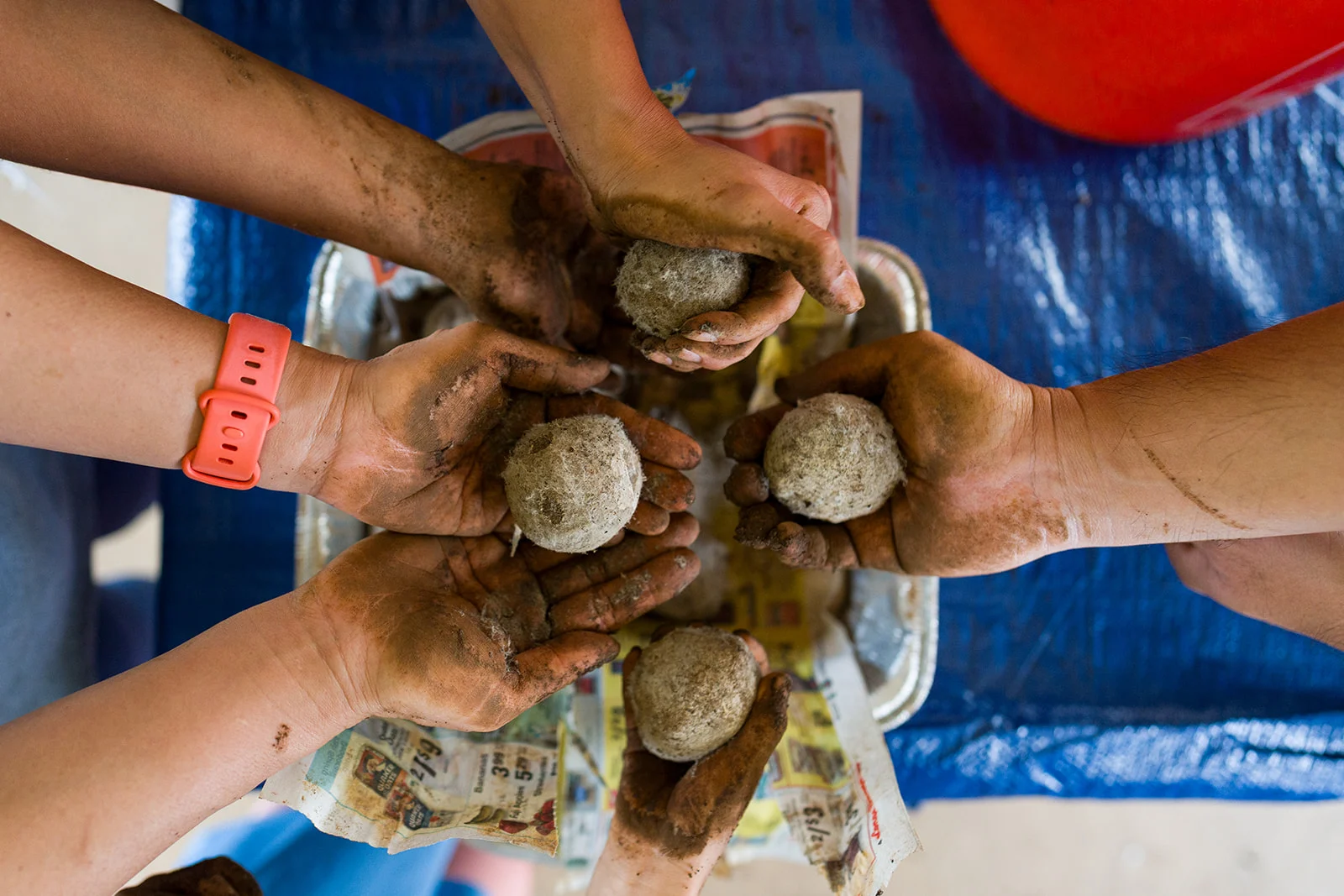
Scientists from Hawaii Pacific University and leaders of the Genki Ala Wai Project participated in a symposium to discuss the effectiveness of mud balls.

Photo: Sean Marrs
To encourage collaboration on the subject of Genki Balls, scientists from the University of the Pacific of Hawaii and leaders of the Genki Ala Wai Project participated in a symposium at Aloha Tower Marketplace to discuss the effectiveness of mud balls in improving water quality on Friday, July 17.
The issue had become controversial after HPU professors Olivia Nigro and Carmella Vizza embarked on a two-year field and lab study and found that Genki balls thrown into Kailua’s Hāmākua Swamp did not improve the canal’s water quality. Rather, they say, conditions worsened.

Volunteers with mud balls at the beginning of the year. Photo: Sean Marrs
Meanwhile, the Genki Ala Wai Project has long coordinated community events to release hundreds of thousands of Genki balls containing potentially beneficial microbes into the notoriously polluted Ala Wai Canal. The leaders of the organization, who HONOLULU spoke earlier this yearthey maintain that their efforts have led to tangible progress, including the return of marine life such as native fish and monk seals.
The symposium served as an opportunity for both sides to discuss things collaboratively, rather than debate their findings in the media.
“It’s a technology that was developed in Okinawa over 30 to 40 years ago,” said Ken Kaneshiro, president and CEO of the Hawaii’i Exemplary State Foundation, under which the Genki Ala Wai project operates. “More than 30 countries are using the technology, and more than 400 scientific papers have been published on the effectiveness and efficiency of the technology. So the research that the HPU group has done may provide some counterintuitive information about the effectiveness of the program. Hopefully, [we’ll] address the issues of how we could work together to make it a much more effective program.”
HPU’s Vizza acknowledged that conversations about Genki Balls have been difficult because their evidence is not what many people expected to hear. “But our responsibility as scientists is not to defend a specific result. Our kuleana is to generate the best evidence we can, communicate it honestly, recognize its limitations and share it with the people responsible for making decisions. That’s why we organized today’s symposium.”
SEE ALSO: Ala Wai is showing signs of life thanks to the nonprofit’s efforts
Diane Seo is the editorial director of HONOLULU magazine.
