
Real time data
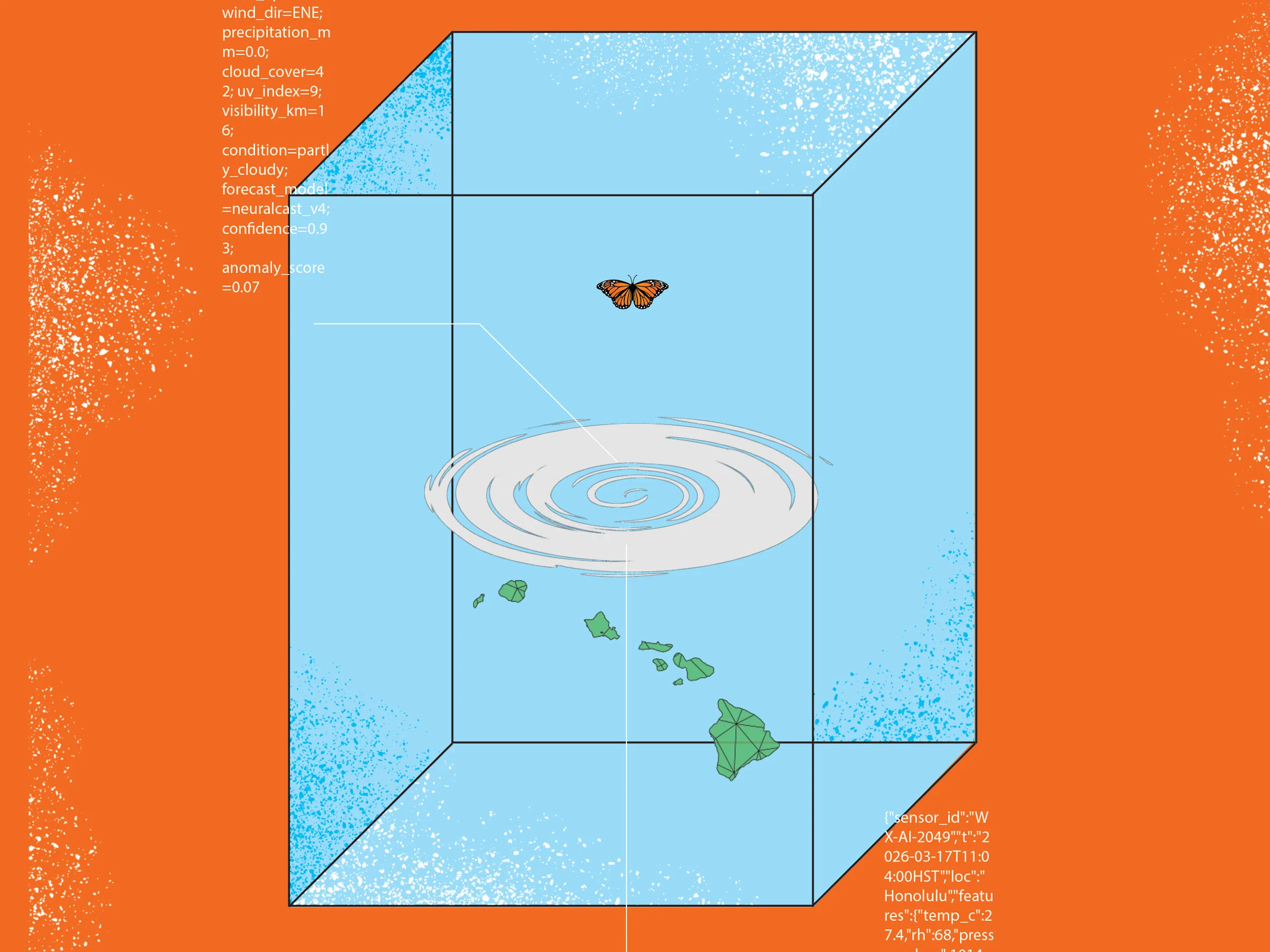
Jason Leigh, professor of computer science and director of the University of Hawai’i’s Advanced Applications and Visualization Lab, is part of a $25 million National Science Foundation project to install 300 advanced AI sensors across the country to provide faster warnings for everything from wildfires to floods.
Leigh’s team plans to deploy two or three sensors on the islands in yet-to-be-determined locations. He says that while AI-enabled sensors are expensive, costing $10,000 or more, they’re a relative steal compared to the rising costs of extreme weather events. In 2024 alone, the US saw 27 disasters that each cost more than $1 billion.
Damage and recovery costs from the wind-fueled inferno that tore through Lahaina in 2023, claiming more than 100 lives and leveling the city, have been estimated at $12 billion.
“We don’t think twice about putting smoke detectors in our homes. Early detection and better forecasting can reduce downtime and protect assets. Even slightly reducing damage from a major event could justify the investment,” says Leigh.
“Foresight and modeling aren’t new. What’s changing is speed, scale and accessibility. When you bring intelligence closer to real-time and embed it directly in the field, you shorten the time between detection and action.”
Green says the Pacific Disaster Center is also using AI to address gaps in hazard detection. The AI-created database that compiled news about this year’s storms is designed to be global in scope. As reports come in, experts tag potential hazards (catastrophic flooding, wildfire risk, etc.) for the model to learn.
In underserved and underserved communities with less real-time data input, the system could serve as an early warning system, combining news and other reports with historical data to flag potential problems that people should be aware of.
“If done correctly, we can start generating more reliable forecasts,” says Green. Like the city, the Pacific Disaster Center is also looking at “digital twin” technology, including as a tool to help policymakers and the public understand the importance of disaster preparedness and investments in critical infrastructure improvements.
